Facility management is no longer viewed as a support function operating behind the scenes. Across the world, it is becoming a strategic business driver that directly impacts operational efficiency, sustainability, workplace experience, and long term asset performance.
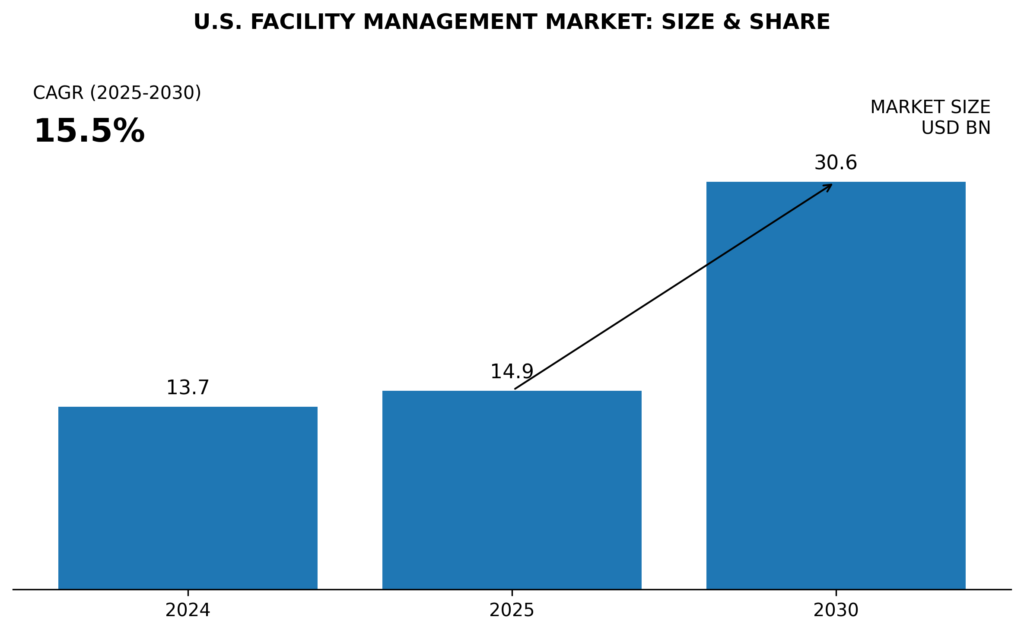
A recent industry report highlights just how rapidly the sector is evolving. The US Facility Management Market is projected to grow from USD 13.7 billion in 2025 to USD 30.6 billion by 2030, representing an impressive 15.5 percent compound annual growth rate.
That means the industry is expected to add nearly USD 17 billion in market value within just five years.
For facility management providers, building owners, and businesses investing in modern workplaces, these numbers reveal where the industry is heading and why organizations are increasingly prioritizing professional facility management services.
The Numbers Behind the Growth
The scale of projected growth demonstrates how important facility management has become in today’s built environment.
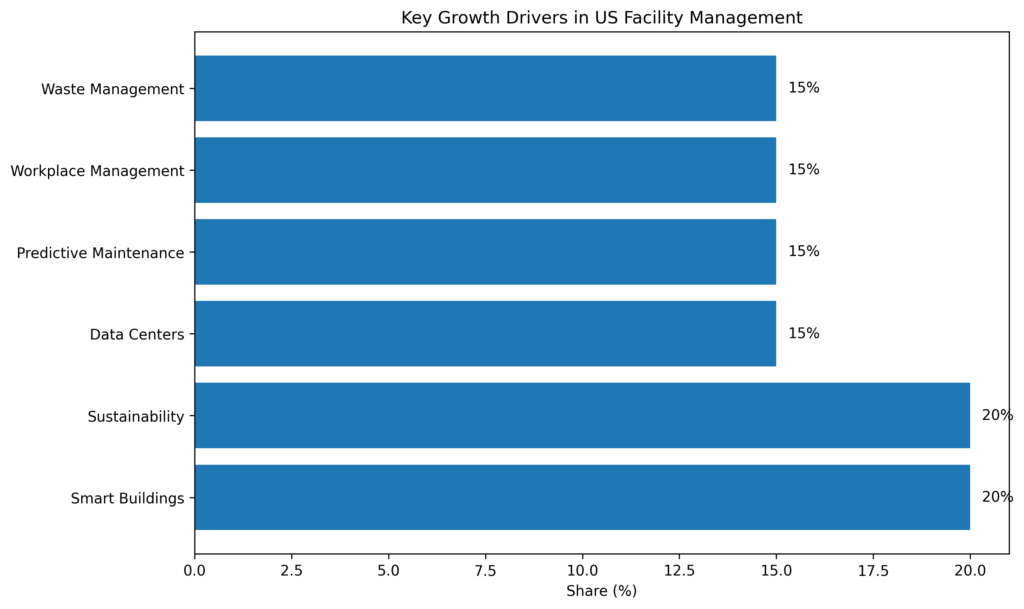
Smart Buildings are driving demand
One of the biggest contributors to market growth is the rapid adoption of smart building technologies.
Commercial buildings are now equipped with connected systems that continuously generate operational data. These systems help organizations monitor performance, improve efficiency, and reduce downtime.
Common technologies include:
• IoT enabled sensors
• Building automation systems
• Smart HVAC controls
• Digital workplace platforms
• Predictive maintenance tools
• AI powered analytics
Instead of waiting for equipment failures, organizations can now identify issues early and address them before they become expensive problems.
This shift from reactive maintenance to predictive maintenance is helping businesses improve asset performance while reducing operational costs.
Sustainability is becoming a Business Priority
Another major growth driver is sustainability.
Organizations are under increasing pressure to improve environmental performance, reduce energy consumption, and meet ESG goals. Facility management teams play a critical role in achieving these objectives through:
• Energy monitoring and optimization
• Smart lighting systems
• Automated building controls
• Waste management programs
• Water conservation initiatives
• Asset lifecycle management
Buildings account for a significant portion of energy consumption, making facility management one of the most effective ways to improve sustainability outcomes. As more organizations prioritize environmental responsibility, demand for specialized facility management services continues to rise.
Data Centers are Creating New Opportunities
The rapid growth of artificial intelligence, cloud computing, and digital services is fueling another major trend: data center expansion.
Modern data centers require highly specialized facility management services to ensure uninterrupted operations. These facilities depend on:
• Precision cooling systems
• Backup power infrastructure
• Continuous monitoring
• Security management
• Critical asset maintenance
Even minor disruptions can result in significant operational and financial consequences. As investment in digital infrastructure grows, facility management providers with technical expertise are positioned to play an increasingly important role.
Workplace Management is Evolving
The workplace itself is also changing. Hybrid work models have transformed how organizations use office space. Companies now need better visibility into workspace utilization, meeting room occupancy, parking management, and employee experience.
This has increased demand for workplace management solutions such as:
• Space reservation systems
• Occupancy monitoring tools
• Workplace analytics platforms
• Smart scheduling systems
Organizations are looking for flexible workplaces that improve efficiency while supporting employee needs.
Waste Management is Emerging as a Growth Area
Waste management is another segment gaining attention within the facility management industry.
Growing sustainability regulations and corporate ESG commitments are encouraging organizations to adopt more structured waste management strategies.
Many facilities are investing in:
• Smart waste tracking systems
• Automated collection scheduling
• Recycling programs
• Digital reporting tools
These initiatives help reduce disposal costs while supporting environmental goals.
The Future of Facility Management
The facility management industry is entering a new phase of growth.
Technology, automation, sustainability, and workplace transformation are reshaping how buildings are operated and maintained.
Organizations now expect facility management teams to contribute directly to:
• Business continuity
• Cost optimization
• Workplace wellbeing
• Asset performance
• Sustainability outcomes
This shift is transforming facility management from a support service into a strategic business function.
Conclusion
The projected growth of the US Facility Management Market from USD 13.7 billion in 2025 to USD 30.6 billion by 2030 highlights the increasing importance of professional facility management in modern organizations.
Smart buildings, sustainability initiatives, workplace transformation, predictive maintenance, and data center expansion are all contributing to this rapid growth.
As facilities become more complex and business expectations continue to rise, organizations that invest in modern facility management practices will be better positioned to improve efficiency, reduce costs, and create future ready workplaces.
Nanya delivers integrated facility management solutions that help organizations improve operational efficiency, sustainability, compliance, and workplace performance. Connect with our team to create smarter, safer, and future ready facilities.