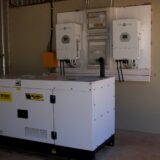
Short answer: a diesel generator (DG set) in a commercial building needs quick daily visual checks, a weekly no-load run, monthly checks of batteries, fluids and filters, and an annual service with a load test, all recorded in a log. Most DG failures during a power cut come from things a checklist catches: a weak battery, low coolant, stale fuel or a clogged filter.
In Bengaluru, a DG set often runs for only a few hours a month. That’s exactly why it gets forgotten. Then the grid goes down during a board meeting, and it doesn’t start.
Daily checks (5 minutes)
- Fuel level in the day tank, and no leaks around the tank, pipes or engine.
- Coolant level in the radiator expansion tank.
- Engine oil level on the dipstick.
- Battery charger on, and showing a normal charging status.
- Control panel in AUTO mode, with no alarms.
- DG room clean, ventilated, and clear of stored material.
- Fire extinguisher in place, with a valid service tag.
Weekly checks
- No-load test run for 10 to 15 minutes. Note how many attempts it took to start, the oil pressure, temperature, voltage and frequency.
- Battery terminals clean and tight, with no white corrosion.
- Air filter restriction indicator.
- Belts for wear and tension.
- Any unusual noise, smoke colour or vibration during the run.
Monthly checks
- Run on load if your setup allows it (through the changeover panel or a load bank), so the engine reaches working temperature.
- Battery specific gravity or voltage readings.
- Fuel water separator drained.
- Radiator fins clear of dust and debris.
- Exhaust system, silencer and flexible joints for leaks.
- Earthing connections intact.
- Changeover (AMF or ATS) tested: cut the mains supply and confirm the DG picks up the load on its own.
Every 6 to 12 months (or per running hours)
Follow the OEM’s schedule, which is usually set by running hours as well as time:
- Engine oil and oil filter change.
- Fuel filters and air filter replaced.
- Coolant tested and topped up or replaced.
- Load bank test at a meaningful share of rated capacity, to check the set can actually carry the building.
- Alternator insulation resistance test.
- Fuel tank cleaned and stored diesel checked. Diesel that sits for months can degrade and collect water.
- Calibration of gauges and safety trips (low oil pressure, high temperature, over-speed).
Keep a log
Every check should go into a log, paper or digital: date, running hours, readings, who did it and what was fixed. When something fails, the log tells you why. When an auditor or a tenant asks, it shows the work was done.
On a digital maintenance platform, the schedule raises the work order automatically, and the technician closes it with readings and photos.
Compliance to keep in mind
DG sets come with environmental and safety requirements. New diesel gensets sold in India must meet the Central Pollution Control Board’s emission and noise norms, and the DG room needs proper ventilation, exhaust height and fire protection. Depending on capacity and location, you may also need consents or approvals from the Karnataka State Pollution Control Board and the electrical inspectorate. Check the specific requirements for your installation with your OEM and the authorities, and track every renewal date.
Red flags in a DG set
- It needs more than one attempt to start.
- Black or white smoke that doesn’t clear after start-up.
- Oil or coolant levels dropping between checks.
- The battery is more than a few years old and has never been load tested.
- Nobody can tell you when it last ran on load.
How Nanya Realty looks after DG sets
Our technicians follow a planned maintenance schedule for every DG set we run, with weekly test runs logged and OEM services tracked against running hours. If you’d like us to check your DG set and its records, call +91 98804 94957 or contact us. If you’re comparing FM partners, our checklist for choosing a facility management company may help.
Frequently asked questions
How often should a DG set be run without load?
A short no-load run once a week is common practice. It keeps the battery charged and fluids moving, and shows up starting problems early. A periodic run on load is also needed.
How often should a DG set be serviced?
Follow the OEM’s schedule, which is based on running hours and time. For standby sets that rarely run, an annual service with a load test is a common minimum.
Why does a DG set fail to start during a power cut?
The most common causes are a weak or discharged battery, fuel problems (water, air or stale diesel), and a changeover panel that isn’t set to AUTO.
What records should we keep for a DG set?
A log of daily and weekly checks, running hours, service history, load test results, and copies of any consents and approvals with their renewal dates.