Indoor air quality has become one of the most important discussions in commercial real estate and facility management. While organizations continue investing in workplace wellness, sustainability, and employee productivity, one factor is increasingly influencing all three: the quality of the air people breathe inside buildings.
According to the latest market analysis, the global Air Purifier Market was valued at USD 16.39 billion in 2024 and is expected to grow to USD 35.48 billion by 2034, registering a CAGR of 8.04% during the forecast period.
These numbers highlight a growing reality for businesses worldwide. Clean air is no longer viewed as an optional workplace amenity. It is becoming an operational requirement for modern commercial facilities.
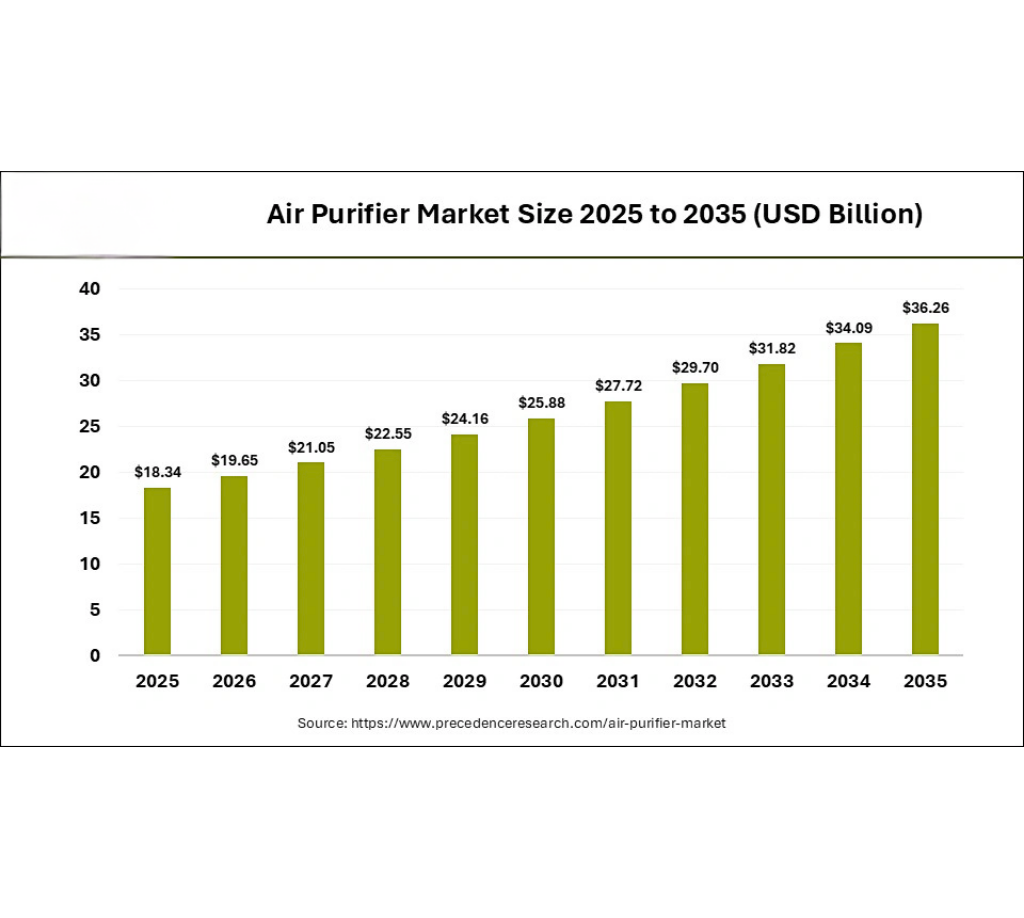
The market’s projected growth demonstrates how seriously organizations are taking indoor environmental quality.
Why Indoor Air Quality Matters More Than Ever
Employees spend a significant portion of their day indoors. Whether in offices, hospitals, educational institutions, hotels, or commercial complexes, indoor air quality directly influences comfort and wellbeing.
Poor indoor air quality can contribute to:
- Reduced concentration levels
- Workplace discomfort
- Lower employee satisfaction
- Increased exposure to airborne pollutants
- Poor occupant experience
As a result, organizations are increasingly evaluating indoor air quality as part of their workplace strategy rather than treating it as a maintenance issue.
The focus has shifted from maintaining buildings to creating healthier indoor environments.
Commercial Buildings Are Driving Demand
One of the key drivers behind market growth is the increasing adoption of air purification systems across commercial spaces. Businesses today are placing greater emphasis on:
- Employee wellbeing
- Workplace productivity
- Healthy building certifications
- ESG initiatives
- Indoor environmental quality
Office buildings, healthcare facilities, educational campuses, hospitality properties, and public infrastructure projects are investing in advanced air purification solutions to improve occupant comfort and building performance.
For facility management teams, air quality management is becoming just as important as maintaining HVAC systems, electrical infrastructure, and safety standards.
HEPA Filters Continue to Lead the Market
The report identifies HEPA filtration technology as the dominant segment in the global air purifier market.
HEPA filters remain widely adopted because of their ability to capture:
- Dust particles
- Pollen
- Allergens
- Fine particulate matter
- Airborne contaminants
Their effectiveness has made them a preferred choice across commercial facilities, healthcare environments, and institutional buildings.
As indoor air quality standards continue evolving, HEPA based solutions are expected to remain at the center of air purification strategies.
Government Initiatives Are Supporting Market Growth
One of the less discussed drivers behind market expansion is the role of government initiatives and environmental policies.
Around the world, governments are introducing measures aimed at improving air quality, reducing pollution exposure, and encouraging healthier built environments.
These initiatives are creating greater awareness around indoor air quality standards and encouraging organizations to adopt cleaner technologies.
For commercial buildings, this means air quality is gradually becoming part of broader sustainability and compliance discussions. As environmental regulations continue to evolve, indoor air quality management is expected to receive even greater attention from businesses and facility operators.
Asia Pacific Leads the Global Market
Regional data shows that Asia Pacific accounts for 39% of the global air purifier market in 2025, making it the largest market worldwide. Europe follows with 28%, while North America holds 22% of the market.
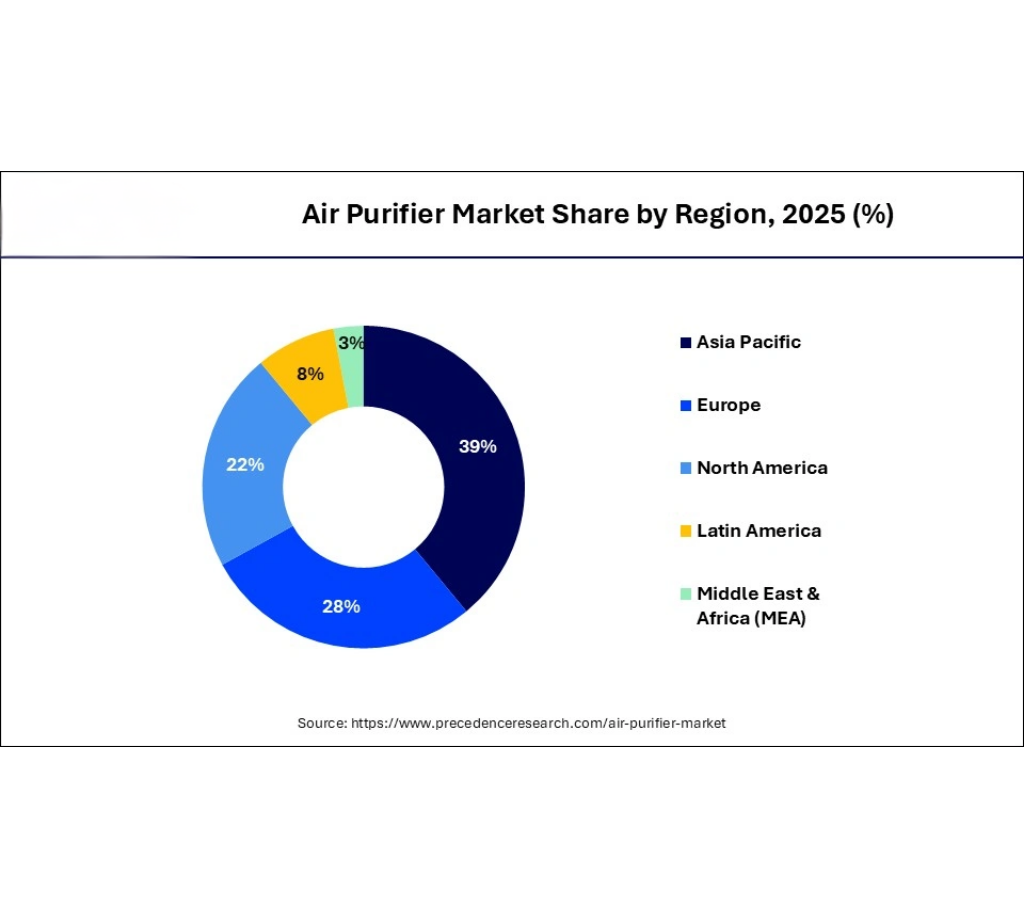
Asia Pacific’s leadership is driven by rapid urbanization, infrastructure development, and increasing awareness of air pollution. As commercial construction continues to expand across the region, demand for air purification solutions is expected to grow alongside it.
Strong Growth Expected Across Asia Pacific
The report also projects substantial growth for the Asia Pacific market over the next decade. The regional market is expected to increase from USD 7.15 billion in 2025 to USD 14.37 billion by 2035.
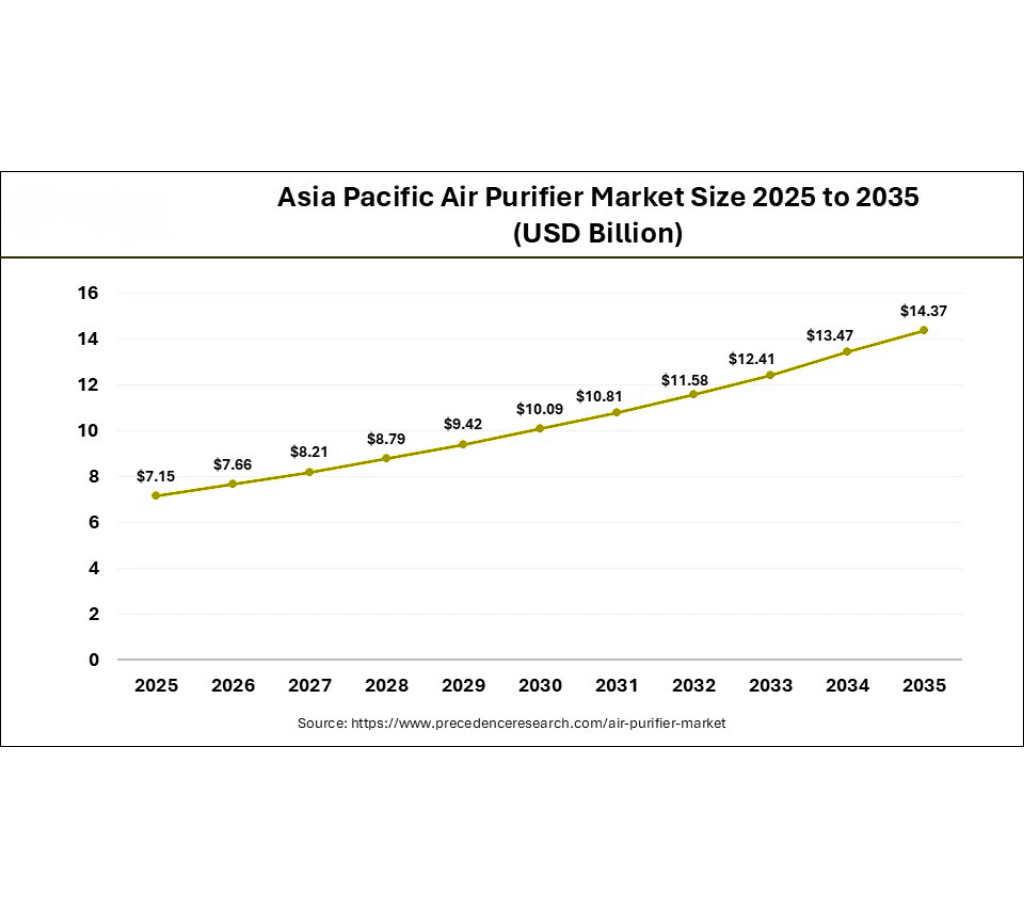
This growth reflects rising investments in healthier buildings across commercial offices, healthcare facilities, educational institutions, and public infrastructure.
For countries like India, where commercial real estate continues to expand rapidly, indoor air quality is becoming an increasingly important aspect of building operations.
What This Means for Indian Businesses
With Asia Pacific already holding 39% of the global market, businesses across India are likely to see increasing demand for indoor air quality improvements.
As commercial real estate continues to expand and workplace expectations evolve, investments in air purification technologies are expected to become more common across:
- Corporate offices
- IT parks
- Healthcare facilities
- Educational institutions
- Airports
- Hospitality properties
Organizations that prioritize indoor air quality today will be better positioned to create healthier and more productive environments in the future.
Conclusion
The global air purifier market is projected to reach USD 36.26 billion by 2035, reflecting the growing importance of indoor air quality across commercial and institutional buildings.
With increasing environmental awareness, government initiatives, smart building adoption, and expanding commercial infrastructure, demand for air purification solutions is expected to remain strong for years to come.
For businesses, cleaner indoor air is no longer just about compliance or maintenance. It is becoming an essential part of creating healthier, safer, and more productive workplaces.
Nanya helps organizations maintain healthier and more efficient workplaces through integrated facility management solutions, HVAC maintenance, preventive services, and workplace operations management. Our team supports commercial buildings in creating environments that improve comfort, wellbeing, and long term operational performance.
Source: https://www.precedenceresearch.com/air-purifier-market